
BUPHY TRAVEL CURATION · One crossing, two sides of Hong Kong
Hong Kong in winter: Central in the morning, the Star Ferry at blue hour and one long dim sum dinner
Hong Kong is at its most persuasive when you give each part of the day a different pace: a slow Central morning, one meal that anchors the afternoon, a harbour crossing at blue hour and a late table where nobody is checking the time.
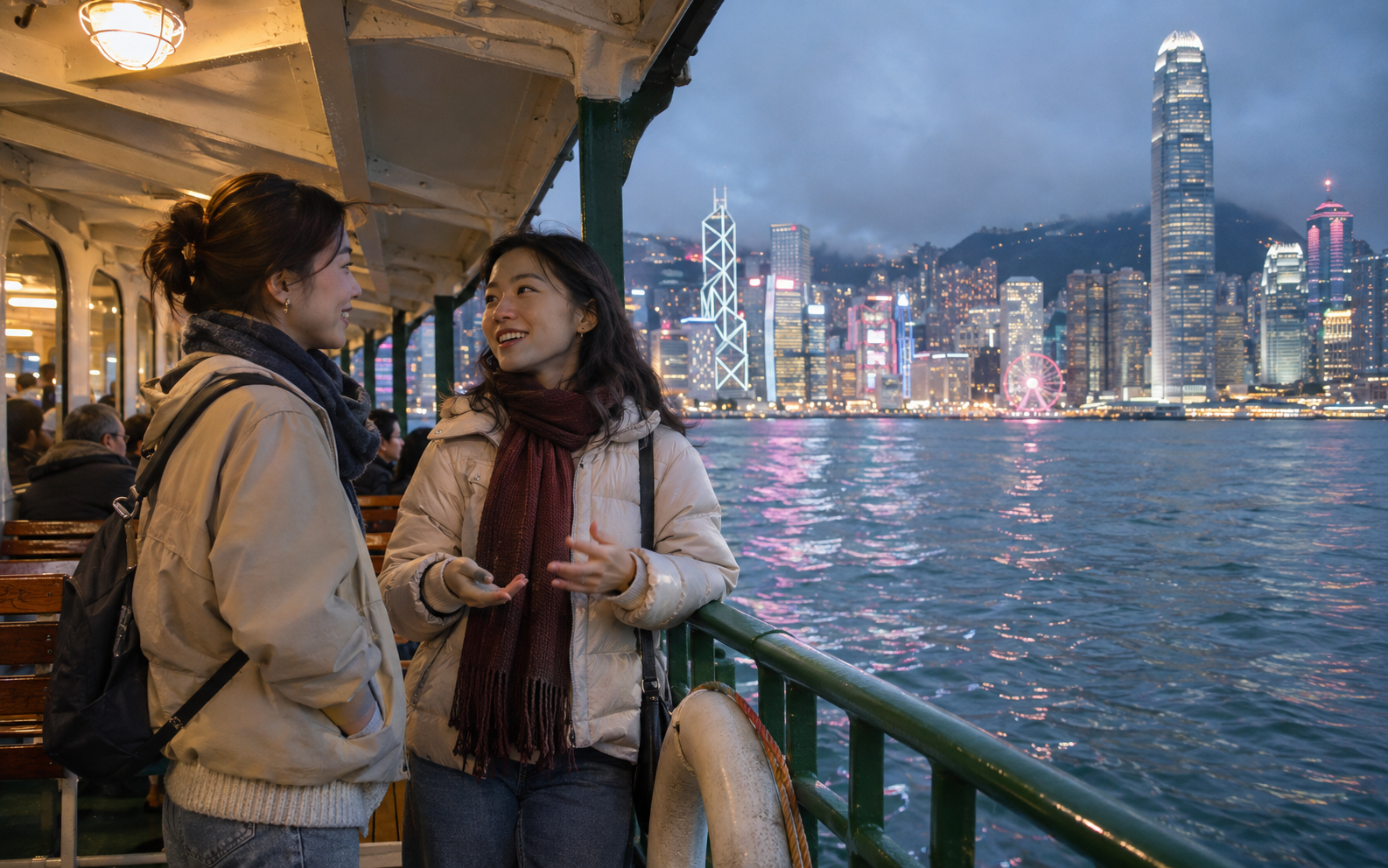
A memorable trip begins less with fitting everything in and more with staying long enough for a place to feel like itself.
Winter is when Hong Kong gives walking its best hours
Hong Kong is often planned as a city of views: a skyline, a peak, a harbour photo. But the strongest version of the trip is built at street level. In the cooler months, a steep lane in Central, a waterfront path, a tram ride and a ferry crossing can sit in the same day without feeling like an endurance test. The city is still fast, but you do not have to be. Start by choosing one side of the harbour for the first half of the day. Hong Kong Island makes sense when you want layers of old shopfronts, office streets, galleries and cafés; Kowloon works when you want denser markets, harbour promenades and a longer evening. Do not try to "finish" both before lunch. Give one neighbourhood enough time to make you curious, then cross the water when the light changes. That small structure stops Hong Kong from becoming a list of stations and turns it back into a place.
Begin in Old Town Central, with no need to rush uphill
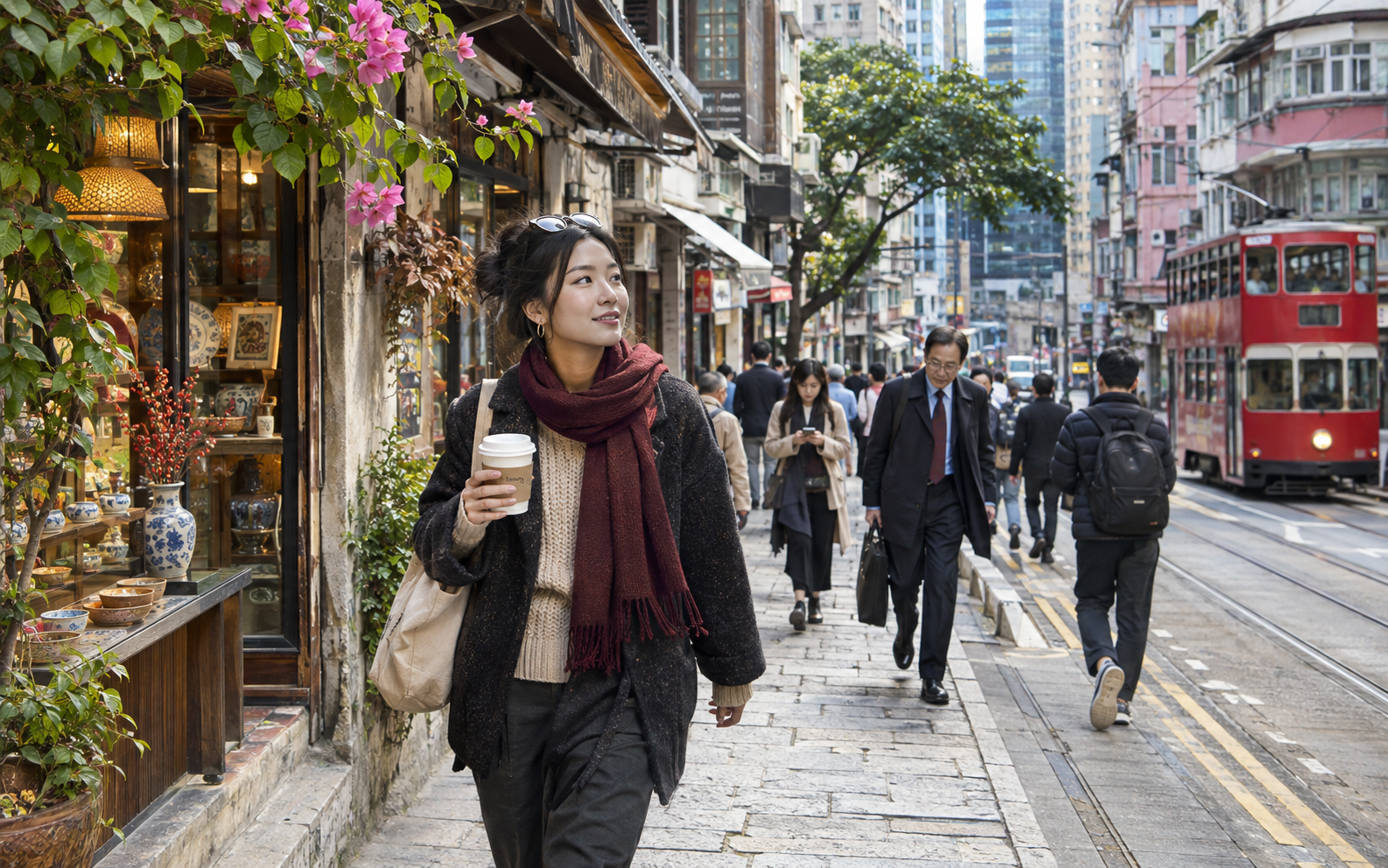
Old Town Central is more rewarding when you leave the map open but the schedule loose. Take one uphill lane, step into a small shop or coffee bar when something catches your eye, and look back toward the towers before moving on. The contrast is the point: a narrow set of steps can lead from a quiet counter to a street full of traffic in a minute. Instead of treating that contrast as something to photograph and leave, let it set the pace for the morning. Pack light enough for the hills. A cross-body bag, water and an extra layer are more useful than a large daypack, especially if you plan to use escalators, ferries and public transport as part of the walk. This is also the best window for a simple local breakfast or coffee, before queues become the activity. The goal is not to find a perfect address; it is to arrive early enough that the street still belongs to people going somewhere.
Choose a dim sum lunch that makes the afternoon feel earned
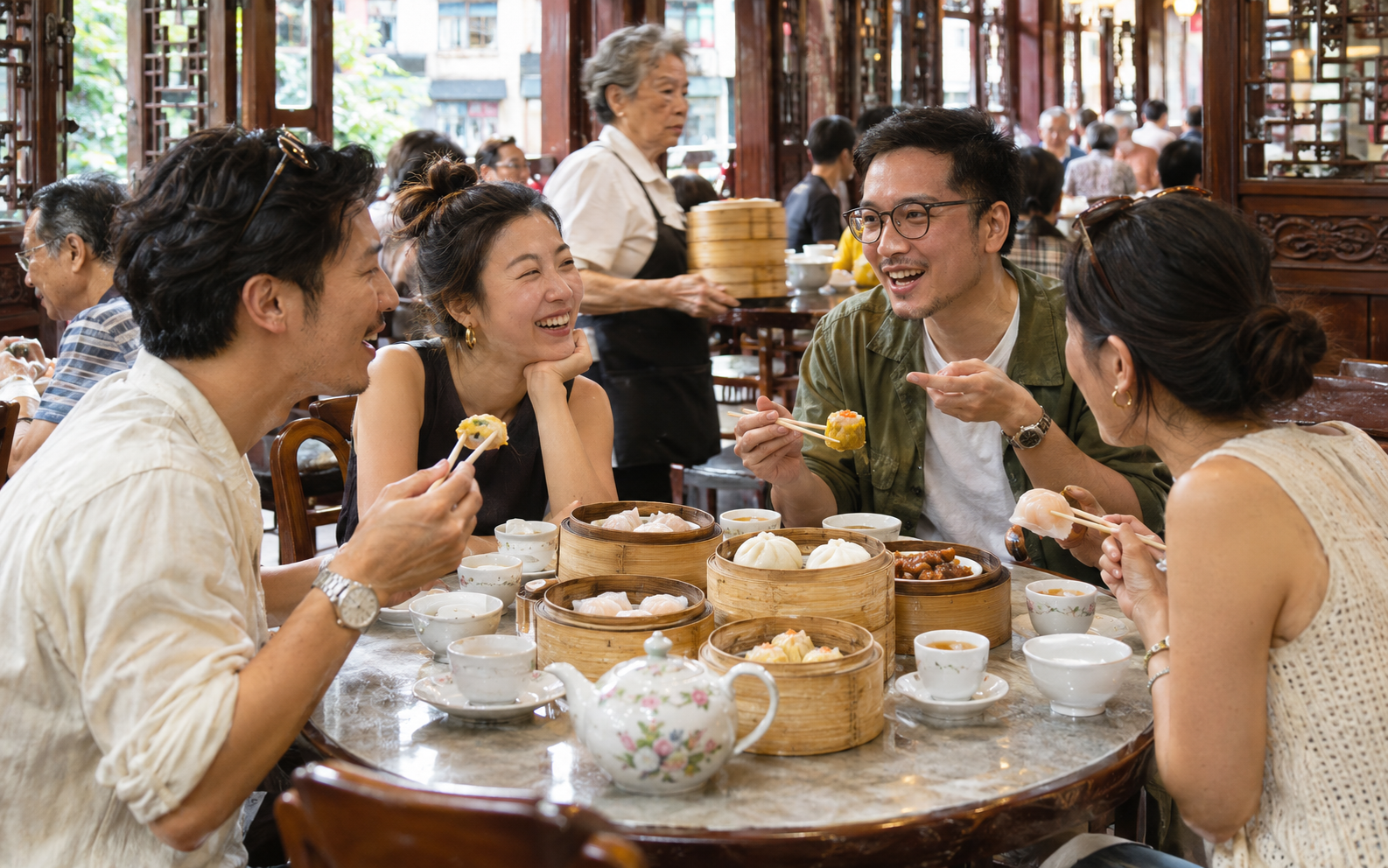
A good Hong Kong meal should not be squeezed between two sights. Make lunch the reason you slow down. Traditional tea houses can be lively, close together and wonderfully unhurried at the same time; modern dim sum rooms may be calmer but still give you the rhythm of a shared table. Go with two or three people if you can, order in rounds instead of all at once, and leave space for tea, conversation and one thing you did not recognise on the menu. The practical move is to choose your meal on the same side of the harbour as the morning, then walk toward the ferry rather than taking a train straight to the next attraction. Central and Sheung Wan are especially satisfying for this: old and new Cantonese food, steep streets, small galleries and the water are close enough that the afternoon can unfold naturally. If a restaurant is essential to your trip, check its current hours and reserve where reservations are offered. The city changes quickly, and a flexible second choice is part of planning well.
Cross the harbour for the change in light, not to tick off the ferry
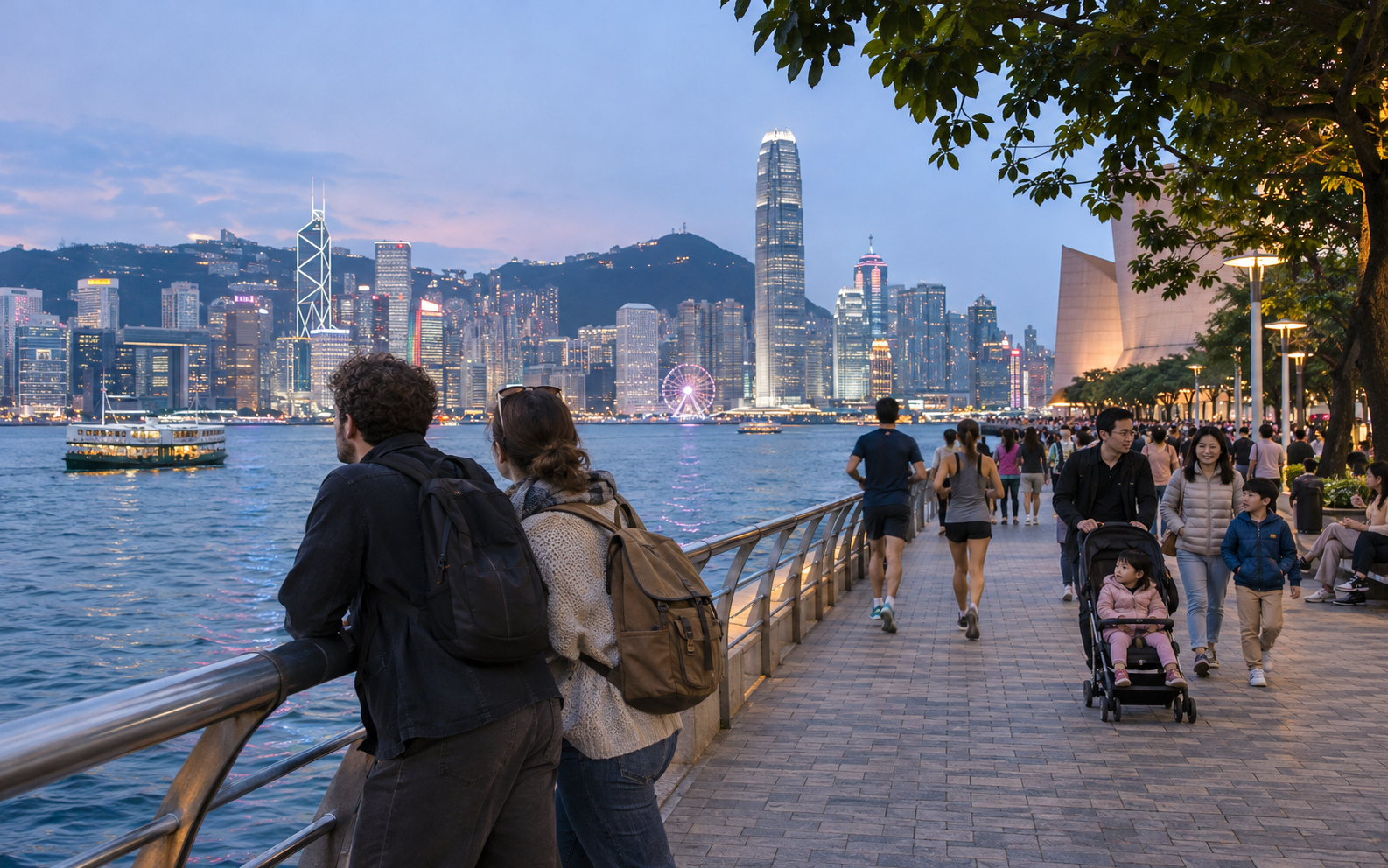
Victoria Harbour is most memorable when you let the crossing be the transition between two moods. Take the ferry around blue hour if your day allows it: the office windows begin to turn on, the water holds the colour of the sky for a little longer, and the skyline becomes less of a postcard and more of a moving backdrop. Stand outside if the weather is comfortable, then resist the instinct to immediately open a map on the other side. Once you land, give the promenade a short, deliberate walk. You do not need to cover the whole waterfront to feel the city change. A fifteen-minute pause at the rail, one slower look back at the island and a small snack can do more than racing to another viewpoint. Hong Kong Tourism Board highlights both Victoria Harbour and the Star Ferry as central parts of the city experience; the useful travel trick is treating them as time, not merely transport.
End with a late table, then pack for a city that keeps changing temperature
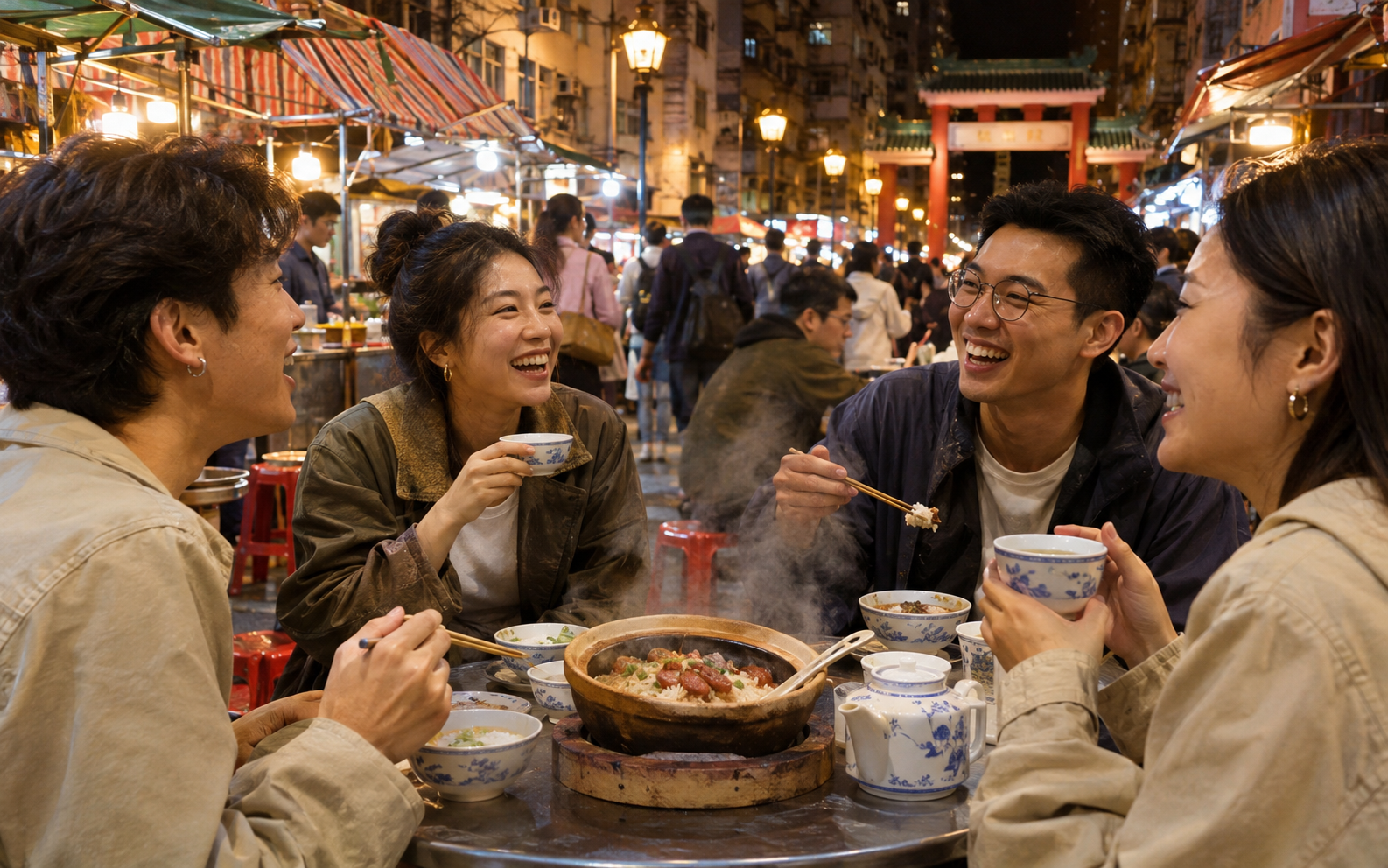
Hong Kong nights invite you to keep adding plans. A better ending is often one late table: a casual dai pai dong-style meal, claypot rice, a bowl of noodles or another round of dim sum. Temple Street and Kowloon’s older neighbourhoods make this easy because the street itself still feels awake after dinner. Go for one thing you genuinely want to eat, not an entire food checklist, then walk until the energy drops naturally. For the bag, think layers rather than a heavy winter coat. Air-conditioned interiors, a ferry deck, a humid street and a late waterfront walk can all feel different in one evening. A light windproof outer layer, comfortable shoes, a compact umbrella and a small reusable tote are more useful than overpacking. Hong Kong works best when your hands are free enough for a ferry rail, a paper cup of tea and the unplanned alley that appears after dinner.
Turn this idea into your own trip
Choose the destination and dates, then prepare your own itinerary and baggage plan.
Build this trip