
BUPHY MAGAZINE · Where should the tracker go?
Can I pack an AirTag in my suitcase? Luggage tracker rules before you fly
Can an AirTag go in a checked suitcase? Start with the short answer, then see where to pack it, what battery limit matters and what to check with your airline.

Travel feels easier when the small, easy-to-miss details are checked before you leave.
The short answer: a small tracker can go in your suitcase—after one check
If you are packing a small Bluetooth tracker such as an AirTag or Tile inside your suitcase, the answer is usually yes. It can stay in the bag you check, provided its battery is within the permitted limit. If you would rather avoid the extra check, put it in your cabin bag; that is the simplest option. The part that confuses many travelers is that a tracker is not a power bank. It is a tiny device that reports a bag’s location. Do not apply rules for a large smart suitcase, spare batteries or power banks to a small tracker without checking what battery is actually inside it.

Which bag should it go in? Cabin bag is easiest; checked bag needs the battery limit
For most travelers, the easy choice is to place the tracker in the suitcase you are checking. But first, look up the battery specification for that exact model. FAA passenger guidance permits a location tracker in checked baggage when its lithium-metal content is no more than 0.3 g, or its lithium-ion battery is no more than 2.7 Wh. You do not need to guess from the size of the device. Search the model name on the manufacturer’s support page or inspect the packaging and product information. If the specification is missing, keep the tracker in your cabin bag until you can confirm it. The rule is about the battery inside the tracker, not about how expensive or small the tracker looks.
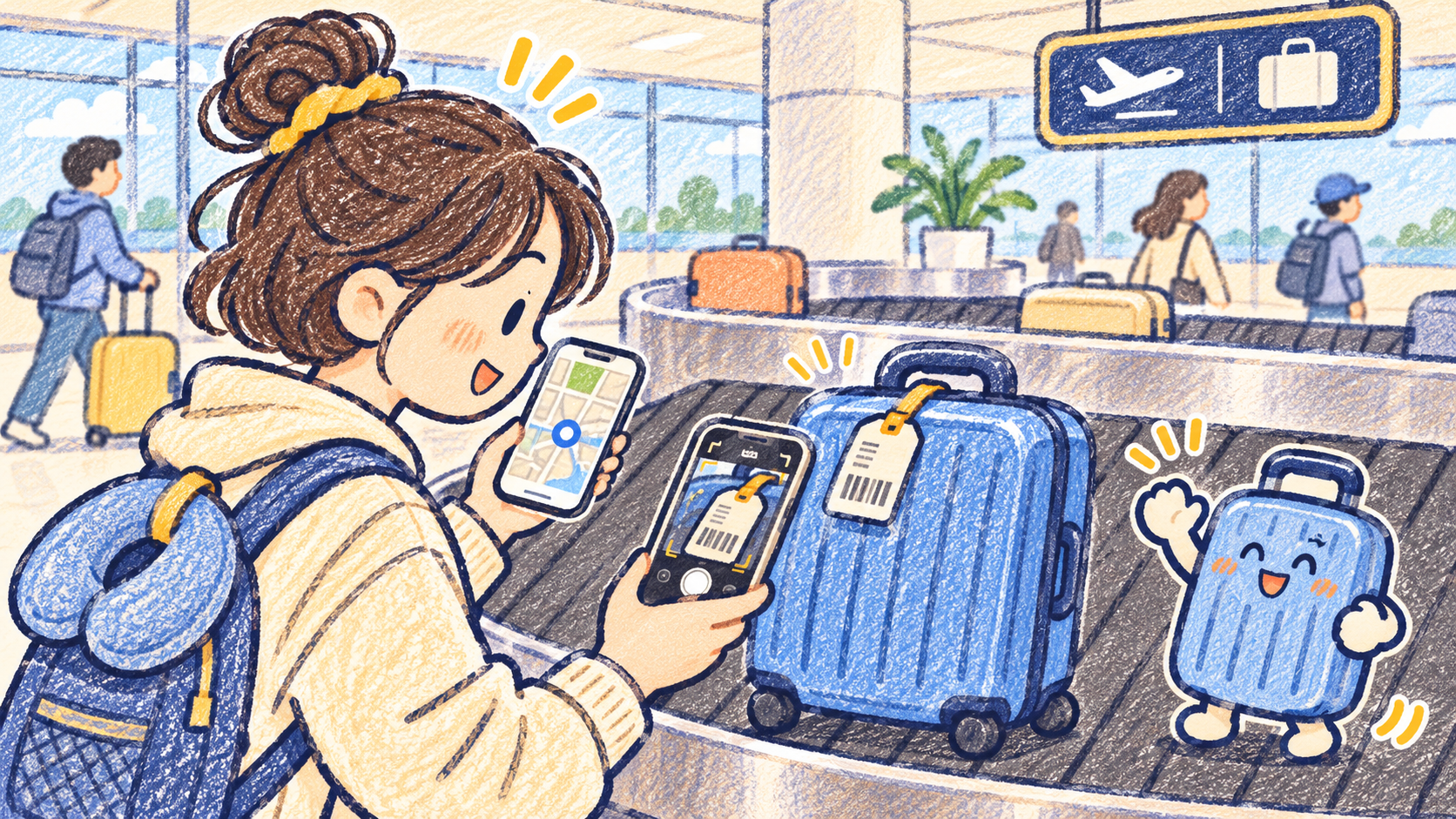
Why check the airline if the tracker is small?
The battery guidance explains the baseline, but the airline that actually flies your route makes the final call for your flight. This matters when you booked through one airline but board another, travel with a partner airline or are asked to check your cabin bag at the gate. Open your booking confirmation and find the words “operated by.” That is the airline whose battery and dangerous-goods page you should check. This takes only a minute and avoids the most frustrating scenario: discovering a different rule at the airport after your suitcase is already packed.
A tracker helps you find a bag. It does not replace a delayed-baggage plan
Seeing your suitcase on a map is reassuring, especially when the carousel is empty. But it cannot make a delayed-baggage report for you or replace your baggage-tag receipt. Before checking the bag, take one clear photo of the suitcase, keep the receipt from the counter and add a contact method to the luggage tag. Keep your passport, medicine, valuables, charger and one change of clothes in the bag that stays with you. That way, even if your checked suitcase takes a later flight, you can still get through the first night without turning the tracker into the only plan.
The 30-second check before you leave for the airport
1. Find the battery specification for your exact tracker model. 2. Check the operating airline’s current guidance. 3. Put the tracker in the bag you chose; if you cannot confirm the specification, use your cabin bag. 4. Photograph the suitcase and save the baggage-tag receipt and booking reference on your phone. That is enough. A tracker is most useful when it sits inside a simple luggage routine you already understand—not when it creates one more thing to worry about.
Continue planning your trip
Choose your destination and dates, then check baggage conditions and trip essentials for your own itinerary.
Start trip planning