
BUPHY MAGAZINE · More space is not less weight
Compression packing cubes: why a smaller suitcase can still be overweight
Compression packing cubes make clothes take up less room, not less weight. Learn when they help, where they can create an overweight-bag surprise and how to pack with a useful weight buffer.
Travel feels easier when the small, easy-to-miss details are checked before you leave.
Compression changes volume, not the mass of what you packed
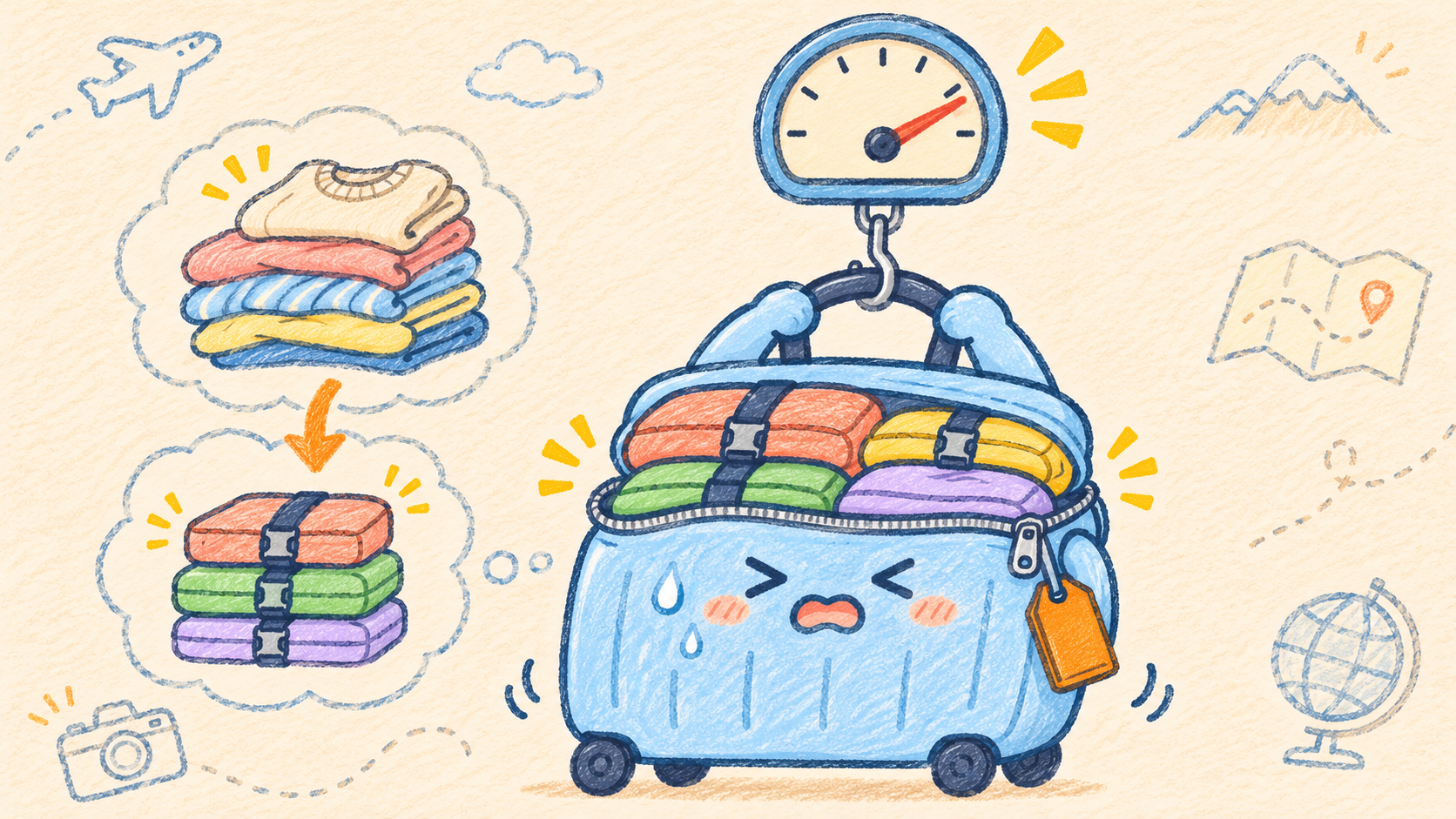
A compression packing cube squeezes air out of clothing and gathers soft items into a smaller shape. That can make a suitcase easier to close and organise. The jumper, jeans and shirts inside still weigh what they weighed before, and the cube itself adds a little material too.
The common trap: free space feels like a packing invitation
After clothes become flatter, a suitcase can look half empty. It is tempting to add another pair of shoes, toiletries, souvenirs or “just in case” layers. This is where compression can quietly turn a well-packed bag into an overweight bag: the volume limit feels farther away while the weight limit has not moved at all.
Use cubes for categories, not as permission to fill every gap
The best use is simple organisation: tops in one cube, underwear in another and a first-night change in a small accessible pouch. Decide what belongs in each cube before you zip it. Do not treat the newly available space as a target that must be filled.
Heavy items need a weight decision, not a compression decision
Shoes, books, hair tools, cameras, chargers and dense toiletries do not become travel-light when placed beside compressed clothing. Check whether the item is necessary, whether it belongs in your cabin bag and whether any battery, liquid or sharp-item rule applies before moving it between bags.
Weigh after you pack, not when the suitcase merely looks full
The final number should include the suitcase, packed cubes, shoes, chargers and the items that are easy to forget in outer pockets. Use a luggage scale or compare your weight with and without the bag on a bathroom scale. Then leave room for last-minute items and for small differences between home and airport scales.
Pack a buffer below your ticket allowance
Your ticket’s allowance can depend on the airline, route, cabin and fare. Once you know the per-bag limit, aim below it rather than landing exactly on the published number. A buffer is what keeps an extra souvenir or a slightly different airport scale from becoming a counter-side repacking session.
A practical rule: compress soft clothes, then stop and check the bag
Compress soft clothing when it helps you organise the suitcase. Keep essentials, documents, medication and any required battery items in the right bag. Before adding anything because there is “still room”, run a final check of bag weight, size and item restrictions. That is how a compression cube stays useful instead of becoming an overweight surprise.
Continue planning your trip
Choose your destination and dates, then check baggage conditions and trip essentials for your own itinerary.
Start trip planning